The short answer: there is no bad month to visit Oahu, but September, May and early November offer the best balance of good weather and fewer visitors. They fall in or near the drier summer season, and official 2025 figures show September and November among Oahu's quietest months for arrivals, while July, August, March and December were the busiest. Come from January to March for humpback whales, and from November to February to watch big North Shore surf.
Oahu is warm all year, so "best" depends on what you want from the trip: dry days, calm water, whales, big waves or a quieter island. This guide uses two official sources so you aren't relying on guesswork. Weather patterns come from the National Weather Service in Honolulu. Crowd levels come from the state's 2025 state visitor figures, published by the Hawaii Department of Business, Economic Development and Tourism (DBEDT) with the Hawaii Tourism Authority, which count how many visitors arrived on Oahu by air each month.
Quick picks by priority
- Best balance of weather and space: September, May and early November.
- Driest, sunniest stretch: May to September, the heart of the dry season.
- Humpback whales: January to March for the peak; November to April for the wider season.
- Watching big North Shore waves: November to February.
- Calm North Shore swimming and snorkeling: May to September.
- Warmest air and ocean: August and September.
- Fewest visitors in 2025: November, then February, September and January.
- Busiest in 2025: July, then August, March and December.
Oahu month by month
The table below is the quickest way to compare months. Crowd levels are based on Oahu's 2025 air arrivals: the four busiest months are marked "Busy," the four quietest "Quieter," and the rest "Moderate."
| Month | Weather | Crowds (2025 Oahu arrivals) | North Shore surf | Whales | Major annual events |
|---|---|---|---|---|---|
| January | Wet season; passing showers, cooler evenings | Quieter (451,445) | Big winter swells likely | Peak season | None listed |
| February | Wet season | Quieter (438,196; a short month) | Big winter swells likely | Peak season | None listed |
| March | Wet season, turning drier | Busy (502,064) | Swells still possible | Peak season | Honolulu Festival |
| April | End of the wet season | Moderate (470,637) | Easing | Tapering off | None listed |
| May | Dry season begins | Moderate (459,436) | Usually calm | Late stragglers possible | None listed |
| June | Dry season; steady trade winds | Moderate (486,340) | Usually calm | Out of season | King Kamehameha Day Floral Parade |
| July | Dry season | Busy (525,173; the year's peak) | Usually calm | Out of season | None listed |
| August | Dry season; among the warmest months | Busy (504,845) | Usually calm | Out of season | None listed |
| September | Dry season; among the warmest months | Quieter (447,567) | Usually calm | Out of season | Aloha Festivals |
| October | Turning from dry to wet season | Moderate (454,554) | Swells starting to build | Out of season | None listed |
| November | Wet season begins | Quieter (426,367; the year's low) | Big swells arrive | Season begins | None listed |
| December | Wet season | Busy (499,075) | Big winter swells likely | In season | Honolulu Marathon |
Sources: arrivals from DBEDT's 2025 Annual Visitor Research Report (Oahu, by air); seasons from the National Weather Service; whale months from NOAA's Hawaiian Islands Humpback Whale National Marine Sanctuary; surf from the Hawaii Department of Health's ocean safety program. Events are listed only where an official organizer or state calendar confirms them.
Good to know: event dates (checked October 8, 2026)
- Honolulu Marathon: Sunday, December 13, 2026, per the race organizer.
- Honolulu Festival: March 5 to 7, 2027, per the festival's official site.
- King Kamehameha Day Floral Parade: held in June around the June 11 state holiday (in 2026 it ran on June 13), per the State Foundation on Culture and the Arts.
- Aloha Festivals: in 2026, the Waikiki Hoʻolauleʻa ran on September 19 and the Floral Parade on September 26, per Aloha Festivals.
Big events fill Waikiki hotels and close roads on the day. Check the organizer's site for next year's dates.
Oahu season by season
Winter: December to February
Winter is whale season and big-wave season at once. Humpbacks arrive from late fall and are most active from January to March, and North Shore swells can be enormous. Rain is more frequent, especially on the windward side, but showers usually pass quickly and Waikiki often stays sunny. December's holiday weeks are among the busiest of the year, while January and February were quieter in 2025. Pack a light layer for the evenings and a compact rain jacket.
Spring: March to May
Spring is a transition. March still has winter swells and peak whale watching, and it was one of Oahu's busier months in 2025, partly because of spring break. By April and May, the dry season is arriving, the North Shore is calming down, and crowds sit in the middle of the range. May in particular is a sweet spot: warm, mostly dry, and before the summer rush.
Summer: June to August
Summer is the classic beach season. Trade winds blow steadily, rain is lighter, and the North Shore is usually calm enough to swim. It is also the busiest stretch of the year, with July the peak month for arrivals in 2025 as families travel during school holidays. Book tours and rooms early, and start popular sights in the morning.
Fall: September to November
Fall is the best-kept secret. September is warm, dry and noticeably quieter than August, with the ocean at its warmest. October is a turning point as the wet season begins and the first winter swells reach the North Shore. November had the fewest arrivals of any month in 2025 and marks the start of whale season, though Thanksgiving week is busier than the rest of the month.
Best time to visit Oahu for weather
Hawaii has two seasons, not four. The National Weather Service describes a summer season from May to October and a winter season from October to April. Summer brings steadier trade winds, more sunshine and less rain. Winter brings more frequent showers and the occasional storm, though most winter days on Oahu are still warm and partly sunny.
The warmest months are not June and July, as many visitors expect, but August and September. The weather service explains that the ocean warms slowly through summer, and the air follows it. The temperature range across the year is small compared with the mainland, so "winter" on Oahu means a light layer for the evening, not a coat.
Why the windward side gets more rain than Waikiki
Where you are on the island matters as much as the month. Trade winds blow from the northeast, push moist ocean air up the windward slopes of the Koʻolau mountains, and wring the rain out of it there. By the time the air sinks down the other side over Honolulu and Waikiki, it is drier. That is why Kailua and Kāneʻohe are green and showery while Waikiki, a 30-minute drive away, can be bright and sunny on the same morning. A passing shower on the windward coast rarely lasts long, so a light rain jacket is worth packing in any month.
Best time to visit Oahu for snorkeling
Calm water matters more than the month, and calm water depends on which coast you're on. According to the Hawaii Department of Health's ocean safety program, winter brings extremely high surf to many north- and west-facing beaches, while summer swells from storms in the southern hemisphere hit the south shore.
- Summer (May to September): the north shore is usually at its calmest, and many beaches there become good for swimming and snorkeling.
- Winter (November to March): stick to sheltered bays and south- or east-facing beaches, and avoid the north shore on big-swell days.
- Any month: check the day's surf forecast and warnings, swim at lifeguarded beaches, and never snorkel alone.
If seeing sea turtles is the goal, our sister site covers where and when to see turtles on Oahu.
Best time to visit the North Shore
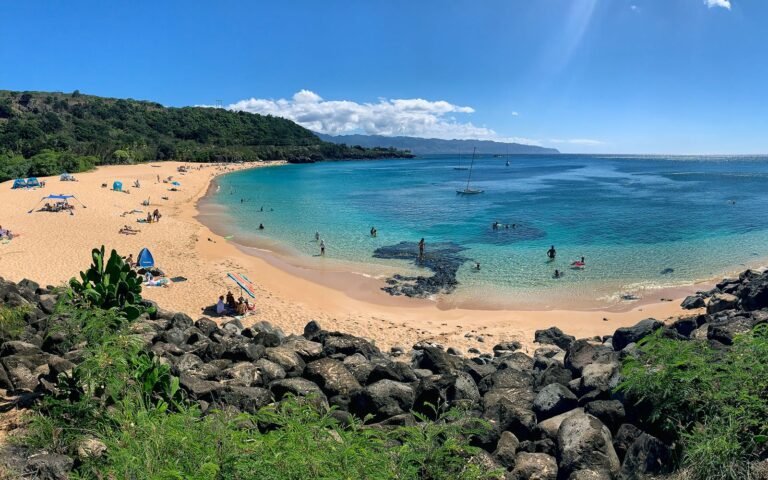
The North Shore has two personalities. From roughly November to February, winter swells can send huge waves into Waimea Bay, Sunset Beach and the Banzai Pipeline, and the area fills with surfers and spectators. It is spectacular to watch from the sand, but it is not swimming weather: big surf brings strong currents and dangerous shorebreak. Stay well back from the water's edge and follow lifeguards and posted warnings.
From about May to September, the same beaches are often flat and clear, and the North Shore becomes a place to swim, snorkel and relax. Spring and fall are transitions, and a swell can arrive early or late in any year.
Best time to avoid crowds and high prices
Oahu welcomed about 5.7 million visitors by air in 2025, and arrivals rose and fell with school and holiday calendars. July was the busiest month, followed by August, March and December. That pattern matches summer vacations, spring break and the winter holidays. The quietest months were November, February, September and January, though February's low total partly reflects its shorter length.
Prices generally follow demand. Flights and hotels tend to cost more around Christmas and New Year, spring break and the summer school holidays, and they often ease in the quieter months. The details vary by your departure city and how far ahead you book, so compare flexible dates rather than assuming any one month is always cheapest. Even in a quiet month, popular spots like Diamond Head and the North Shore can be busy at midday, so start early.
Hurricane season
The Central Pacific hurricane season runs from June 1 to November 30, according to NOAA's Central Pacific Hurricane Center, which also notes that storms can form outside those months. If you travel in late summer or fall, watch the center's forecasts in the days before your trip, choose bookings you can change, and follow official guidance if a storm approaches.
Visiting Oahu and Maui on one trip
The two-season pattern from the National Weather Service applies across the Hawaiian Islands, so the best months for Oahu are broadly the best months for Maui too. Each island has its own wet windward and dry leeward sides, so where you stay matters more than which island you're on. If you're still deciding between the two, read our guide to Oahu or Maui for a first trip.
What each season means for a circle island day
A circle island tour crosses almost every microclimate on Oahu in one day, from sunny Diamond Head to the green windward coast and the North Shore. Our tour runs all year, and each season changes the day a little:
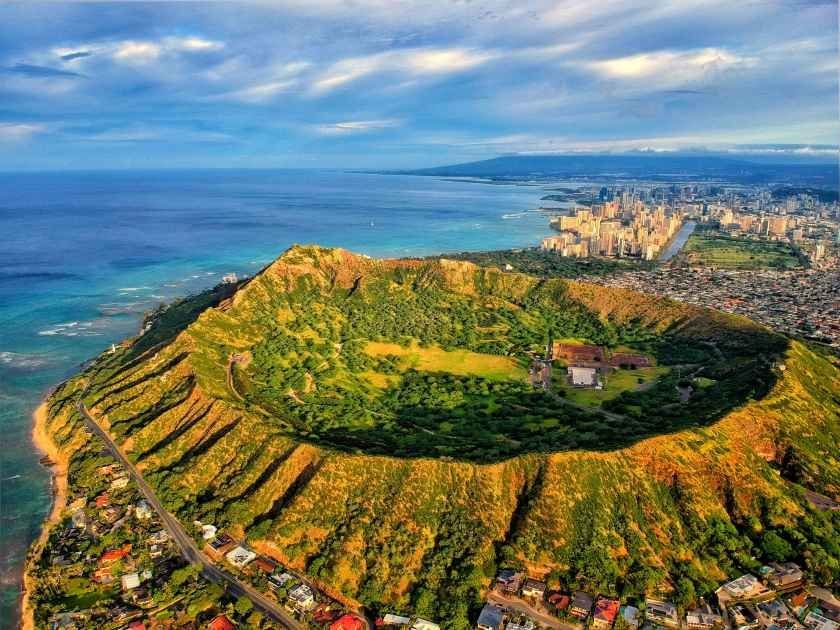
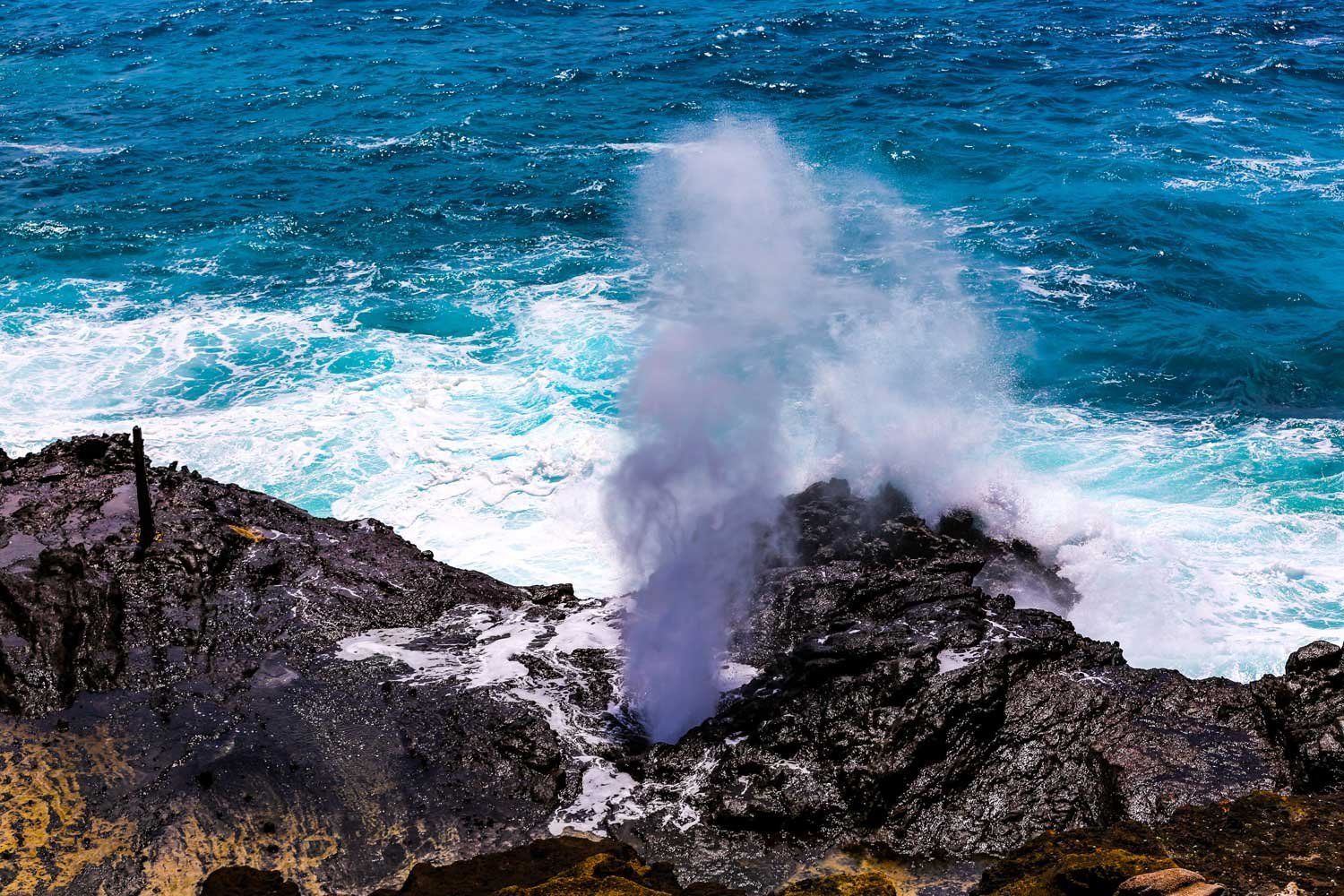
- Winter whales: from about January to March, humpback whales are sometimes seen spouting or breaching offshore from the ocean-facing Diamond Head and Halona Blowhole lookouts. Sightings are never guaranteed, but bring sunglasses and keep watching the horizon.
- Winter surf: on big-swell days, the drive along the North Shore passes some of the world's most famous waves. Watching them from the road and the sand is part of the experience.
- Turtle Beach: whether the water is calm enough to swim depends on the day's surf, and it is usually calmer in summer. Turtles can be watched from the sand in any season, from at least 10 feet away.
- Summer heat: August and September are the warmest months, so bring water, sunscreen and a hat. Trade winds keep most lookouts breezy.
- Rain: a shower on the windward coast in winter is common and usually brief. Pack a light rain layer and keep going.
See all of Oahu in one day, in any season
9 stops from Diamond Head to Turtle Beach and Dole Plantation, with pickup from six Waikiki points. From $49 with code FANTASY50, or $59 with a free malasada and snorkel gear.
Check dates and bookThe bottom line
For the best mix of weather and space, aim for September, May or early November. Choose January to March if whales are the priority, November to February for big-wave watching, and May to September for calm North Shore swimming. If your dates are fixed to school holidays, Oahu is still wonderful: book early and start your days early. Once you've picked your dates, our guide to where to stay on Oahu will help you choose a base.
Picked your dates? Save a day for the whole island
About 9.5 hours, 9 stops and a full 75 minutes at Turtle Beach. Pickup from six Waikiki points between 6:50 and 7:15 a.m.
Book the circle island tour